
Early in pastoral ministry, a phrase repeated by a seasoned pastor slowly took root over time. It surfaced in sermons, counseling conversations, and ordinary discussions about life and ministry. At first it sounded almost too simple, but experience gradually revealed its depth.
Everything flows from prayer and the presence of the Lord.
Human beings were not only created by God; they were created for God. Scripture consistently presents life, joy, and purpose as realities that emerge from nearness to Him. Jesus captured this truth clearly when He said, “I am the vine; you are the branches.” Life flows from abiding in Him.
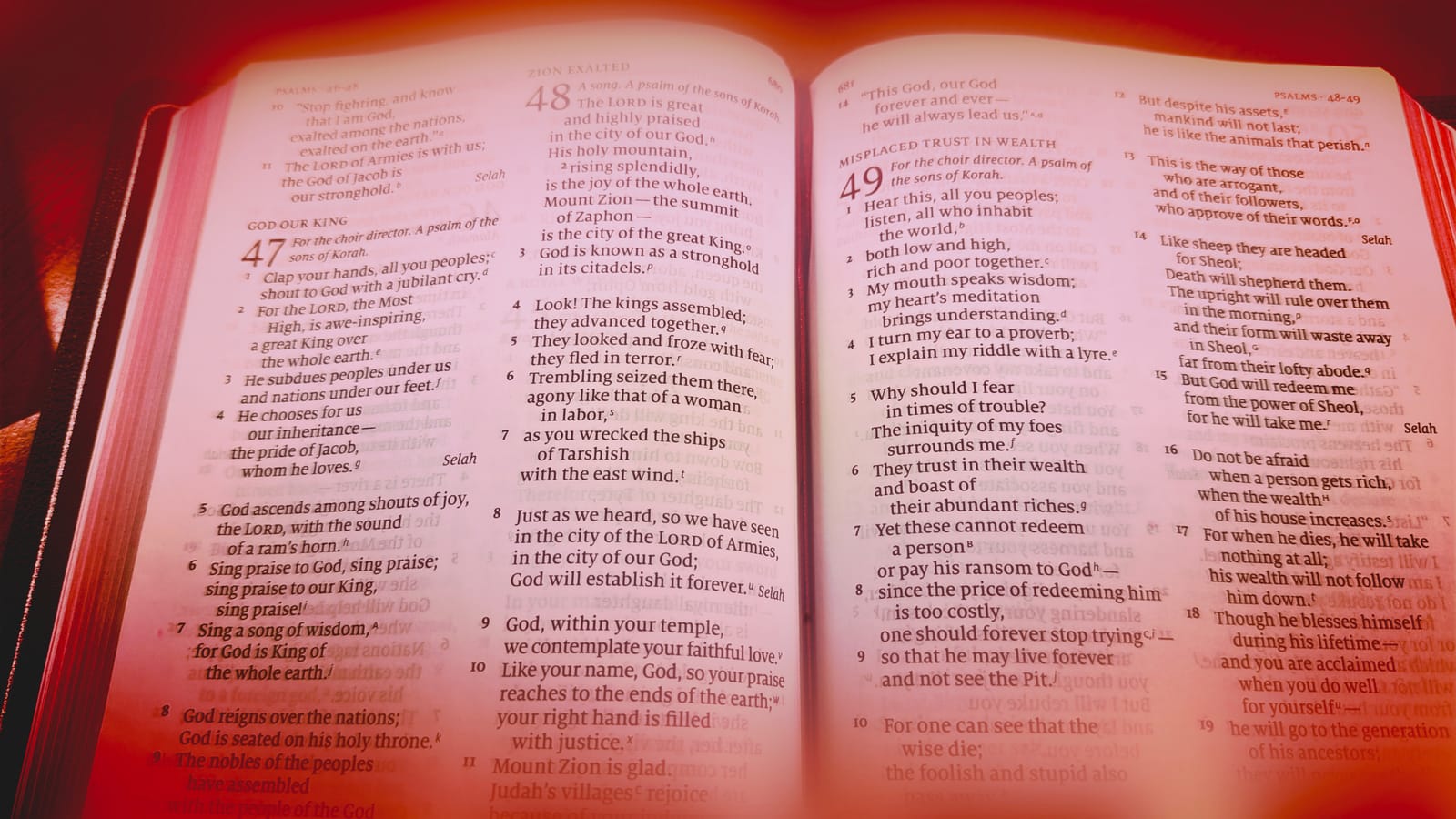
Psalm 48 celebrates that reality. The psalm rejoices not merely in what God has done, but in where God dwells and what flows from His presence. It portrays the people of God reflecting on the significance of Zion, the place where the Lord made His presence known among them.
The central message of the psalm is both simple and profound: in God’s presence we find our deepest satisfaction, and from His presence our mission in the world begins.
A Song of Exuberant Praise
Psalm 48 opens with a declaration of praise.
“The Lord is great and highly praised in the city of our God, his holy mountain.” (Psalm 48:1, CSB)
The tone is celebratory rather than reflective. The psalm belongs alongside Psalms 46 and 47, forming a trilogy that celebrates God’s protection, kingship, and presence. Each psalm responds to the reality that the Lord reigns over His people and over the nations.
The reason for praise becomes clearer as the psalm progresses.
“Like your name, God, so your praise reaches to the ends of the earth.” (Psalm 48:10, CSB)
God’s greatness determines the scope of His praise. Because His name is great, His praise rightly extends beyond Israel to the entire world.
The focus of the psalm is Mount Zion, the city where the temple stood. The psalmist celebrates its towers, ramparts, and citadels. Yet geographically speaking, Mount Zion is not an impressive mountain. Compared to the towering peaks of many landscapes, it appears modest.
What makes Zion significant is not its elevation but its meaning. The psalmists were not celebrating a remarkable location; they were celebrating the presence of God. The temple stood there, and the temple symbolized the dwelling place of the Lord among His people.
Zion was the joy of the whole earth because God was there.
The Story of God’s Presence
Psalm 48 reflects a theme that runs throughout the entire biblical narrative: God’s desire to dwell with His people.
The opening chapters of Genesis describe humanity living in the unhindered presence of God in the garden of Eden. Sin fractured that relationship, and exile from God’s presence became the deepest consequence of the fall.
Yet the rest of Scripture tells the story of God restoring what was lost.
God met with Israel through the tabernacle in the wilderness.
His glory later filled the temple in Jerusalem.
In the fullness of time, God came into the world through the incarnation of Jesus Christ.
“The Word became flesh and dwelt among us.” (John 1:14, CSB)
After Christ’s resurrection and ascension, the Holy Spirit came to dwell within believers. The New Testament describes the church as the temple of the living God, and individual believers as those in whom God now resides through His Spirit.
The biblical story ultimately moves toward a future where God’s presence will be experienced fully and permanently.
“Look, God’s dwelling is with humanity, and he will live with them.” (Revelation 21:3, CSB)
Psalm 48 sits within this larger story. It celebrates the reality that God makes Himself known where He dwells.
“God is known as a stronghold in its citadels.” (Psalm 48:3, CSB)
Everything flows from His presence.
Two truths emerge from this reality. First, our deepest satisfaction is found in God Himself. Second, God’s presence sends His people outward with His mission.
The Satisfaction Found in God
Psalm 48 describes the blessings experienced by those who dwell near the presence of the Lord.
Protection appears in the description of God as a stronghold.
Hope appears in the promise that God will establish His people forever.
Love appears as the people reflect on His faithful covenant love.
Joy emerges as Zion rejoices in the justice of God’s rule.
Guidance appears in the assurance that God leads His people.
The psalm suggests that what human beings seek in many different places ultimately finds its fulfillment in God alone.
At one point, the psalm indirectly contrasts Mount Zion with Mount Zaphon. In the ancient world, Zaphon was associated with the worship of Baal and other pagan deities. It appeared impressive and imposing, a mountain that seemed more glorious than Zion.
Yet Zion possessed something Zaphon could never offer: the presence of the Lord.
This contrast exposes a recurring spiritual temptation. Many things promise satisfaction. Success, comfort, achievement, or pleasure often appear attractive and powerful. Yet Scripture consistently reminds us that substitutes for God cannot ultimately fulfill the human heart.
The presence of God provides what every idol promises but fails to deliver.
For Christians, this truth finds its fulfillment in Jesus Christ. He is the true King of Zion, and through Him believers are brought into fellowship with the living God.
The Mission That Flows from His Presence
Psalm 48 also emphasizes that God’s presence is not meant to remain hidden. It produces a movement outward toward the nations.
“Like your name, God, so your praise reaches to the ends of the earth.” (Psalm 48:10, CSB)
The glory of God is meant to be known everywhere. The people who experience His presence are called to proclaim His greatness among the nations.
This vision anticipates the global worship described later in Scripture.
Revelation portrays a future gathering where people from every nation, tribe, language, and people group stand before the throne of God and worship the Lamb.
The mission of the church flows naturally from this vision. Those who find their deepest satisfaction in God desire for others to know Him as well. Worship and mission are not competing priorities. They are inseparable expressions of the same reality.
The more believers delight in God’s presence, the more they long to see His praise spread throughout the world.
The Choice Before the Heart
Psalm 48 ultimately confronts the reader with a quiet but searching question. Where does true satisfaction lie?
The psalm points toward Zion—the place where God dwells. Yet throughout history people have often been drawn toward other mountains, other centers of meaning and identity that promise fulfillment apart from God.
The biblical message remains consistent: only the presence of the Lord satisfies the human heart.
Through Jesus Christ, the barrier created by sin has been removed. His life, death, and resurrection make it possible for sinners to be brought near to God. Faith in Christ does not merely lead to forgiveness; it restores the relationship for which humanity was created.
The closing words of the psalm express enduring confidence in the God who dwells with His people.
“This God, our God forever and ever— he will always lead us.” (Psalm 48:14, CSB)